D R I V E W A V E

Loading...

Road Signs Ireland

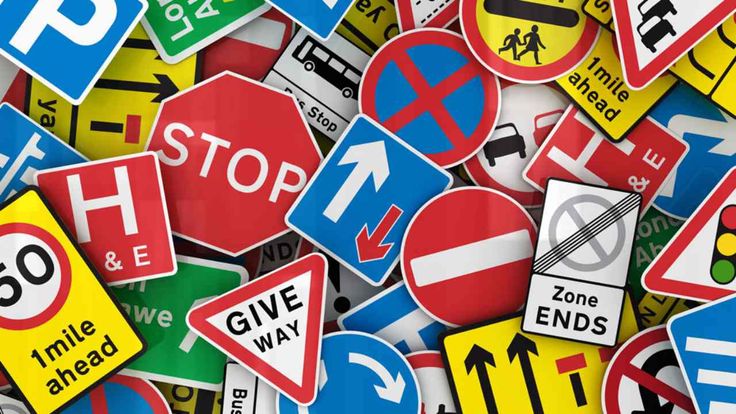
Road signs in Ireland are used to standardise the process of safely and efficiently guiding traffic on public road networks. Clear symbols, colours, and visual cues are used for each type of road sign to convey essential information on safety features, warnings, directions, and rules to drivers and other road users.

While many road signs in Ireland are similar to those across Europe and elsewhere, there are distinct Irish styles of road signs, as well as specific legal requirements for them. Under Irish road law, drivers must know the differences between Irish and other road signs to comply with the law and drive safely and responsibly.

Ireland's Traffic Signs

As you learn to become a confident and safe driver in Ireland, understanding the purpose of various road signs is one of the most important things you will need to do. Road signs help ensure that all road users have adequate information to maintain good order and reduce the risk of accidents. At Drivewave School of Motoring, we focus heavily on helping each student develop a solid understanding of how to interpret road signs, as they play an important role in both the theoretical and practical portions of the driving test.

In Ireland, road signs can generally be classified into three major categories: regulatory, warning, and informative. Regulatory signs advise drivers of laws they must obey, such as speed limits or “No Entry” signs. Warning signs generally alert drivers to potential dangers ahead, including sharp bends, pedestrian crossings, roundabouts, or roadworks. Informative signs provide practical advice, such as directions, information about the motorway, and services nearby.

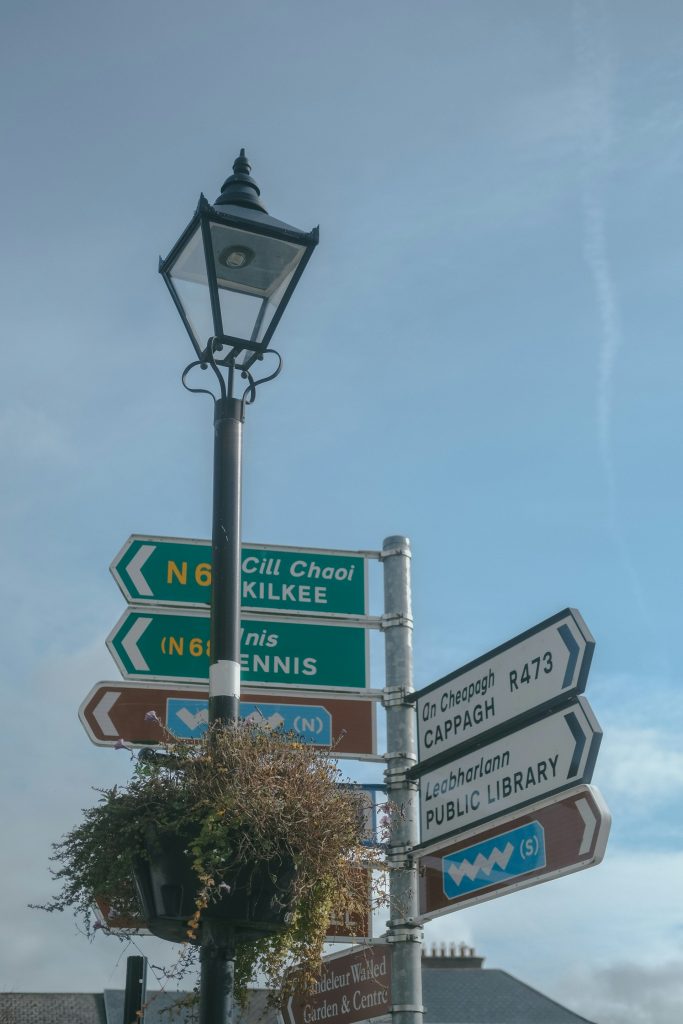
Most signs on Irish roads feature a clear symbol with very little text, enabling drivers to quickly interpret them while driving. The speed limit on Irish road signs is indicated in kilometres per hour (km/h), and most signs conform to international standards; however, some signs and road markings are unique to Ireland. For that reason, it is really important for learners and visitors to Ireland to study the signs.

At Drivewave School of Motoring, we teach learners to identify and understand traffic signs in a real driving environment. Knowing how to read and follow traffic signs not only improves the chances of you passing the driving test but also gives you the ability to develop awareness, judgement, and confidence that are essential for driving safely on Irish roads.

Master Road Signs in Ireland

Learn, recognise, and understand all Irish road signs with Drive Wave. Start practising
today and drive safely with confidence!

Register Now

Junction Signs

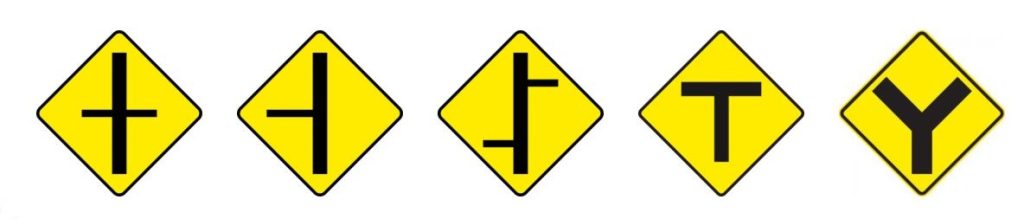
Junction signs are important for assisting drivers as they approach and cross intersections on Irish roads. Junction signs provide warnings and clear instructions, helping drivers understand priority rules, slow down, and navigate the junction correctly. Drivewave School of Motoring places a strong focus on junction awareness, as many points on both the theory and practical driving tests relate to it.

In Ireland, junction signs often indicate where T-junctions, crossroads, roundabouts, or side roads are located. In addition, some junctions will have signs directing drivers to stop completely, yield, or proceed with caution. By identifying junction signs early, drivers can predict traffic flow, adjust their speed, and position their vehicles to make safe, informed decisions.

If drivers do not pay close attention to junction signs, the consequences can be serious, including accidents or traffic delays. Learners should pay particular attention when approaching a junction by checking their mirrors, indicating clearly, observing all road markings, and giving way where appropriate. Proper observation and correct positioning at junctions are the first steps to safe junction handling.

At Drivewave School of Motoring, we give our learners real-life training at junctions, where they can identify multiple signs early enough to make proper driving decisions, and develop the correct road rules and guidelines for safe driving.

Understanding how to identify junction signs is crucial to ensuring that our driver-safety students can become conscientious, responsible, competent, and ultimately successful drivers on the roads of Ireland.

General Warning Signs

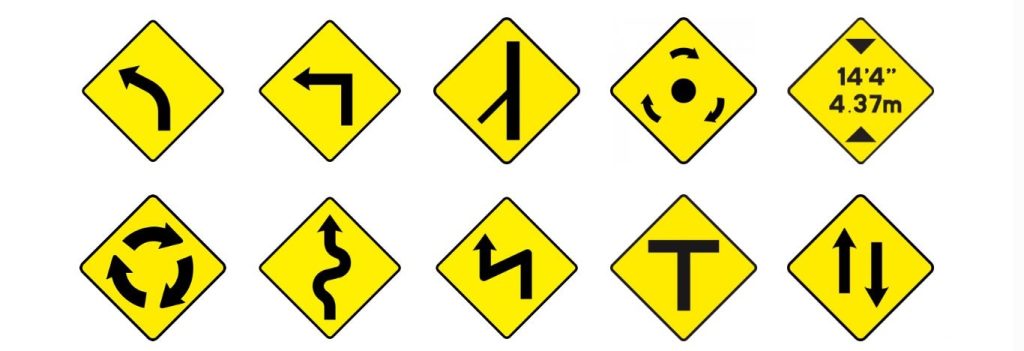
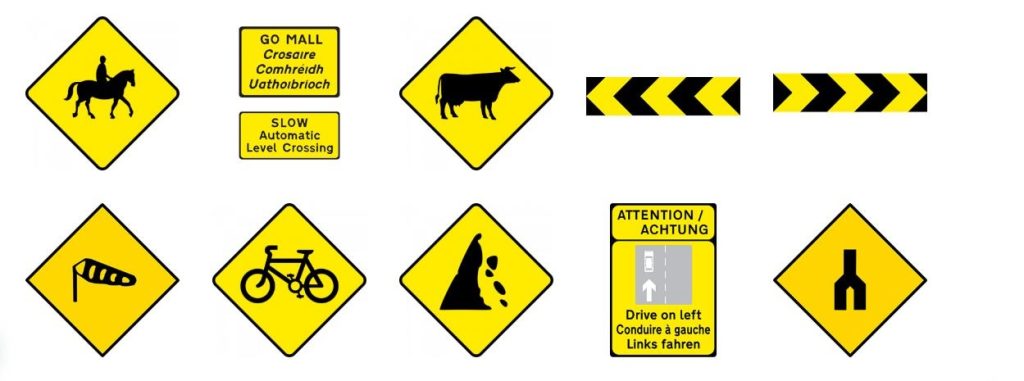
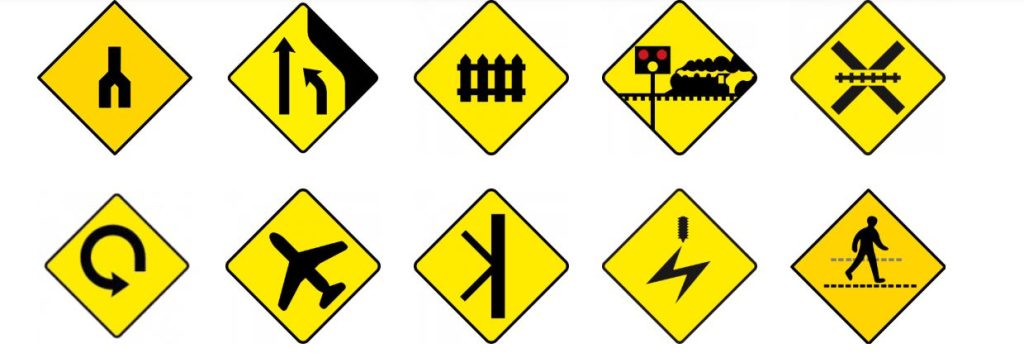
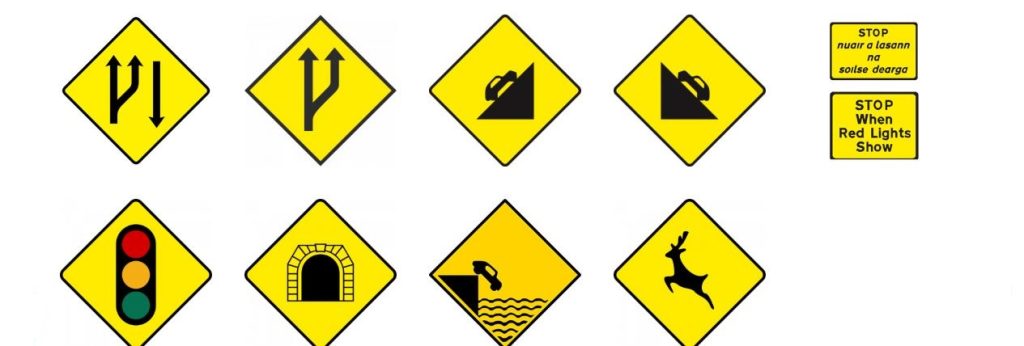
General warning signs are used across Ireland to inform all drivers of potential hazards, allowing them to reduce their speed and adjust their driving style to accommodate them.

General warning signs are a key component of promoting road safety, and road safety is continually assessed in both RSA theory and practical driving exams.

At Drivewave School of Motoring, we will assist our learner-drivers to succeed in their learning by recognising general warning signs and, more importantly, learning how to respond to them properly and safely.

General warning signs typically display a triangular shape (pointing upward), with red trim and a black graphic on a white base, making them easy for drivers to identify at a glance.

General warning signs give drivers a final warning about the potential danger ahead. The type of general warning sign may vary; however, the functions that general warning signs can typically describe and warn about include: a harp curve ahead, narrow roadway, pedestrian crossings, road works, bumps or uneven surfaces, and animals crossing.

Although warning signs do not provide specific instructions, they point out potential hazards, allowing drivers to anticipate what may happen ahead of time and adjust their speed appropriately to the roadway conditions.

By recognizing warning signs and responding appropriately, you can greatly reduce the risk of an accident and create a safe driving experience for everyone on the road.